
Notable Figures
Learn about the pioneers, leaders, and artists resting within our historic grounds
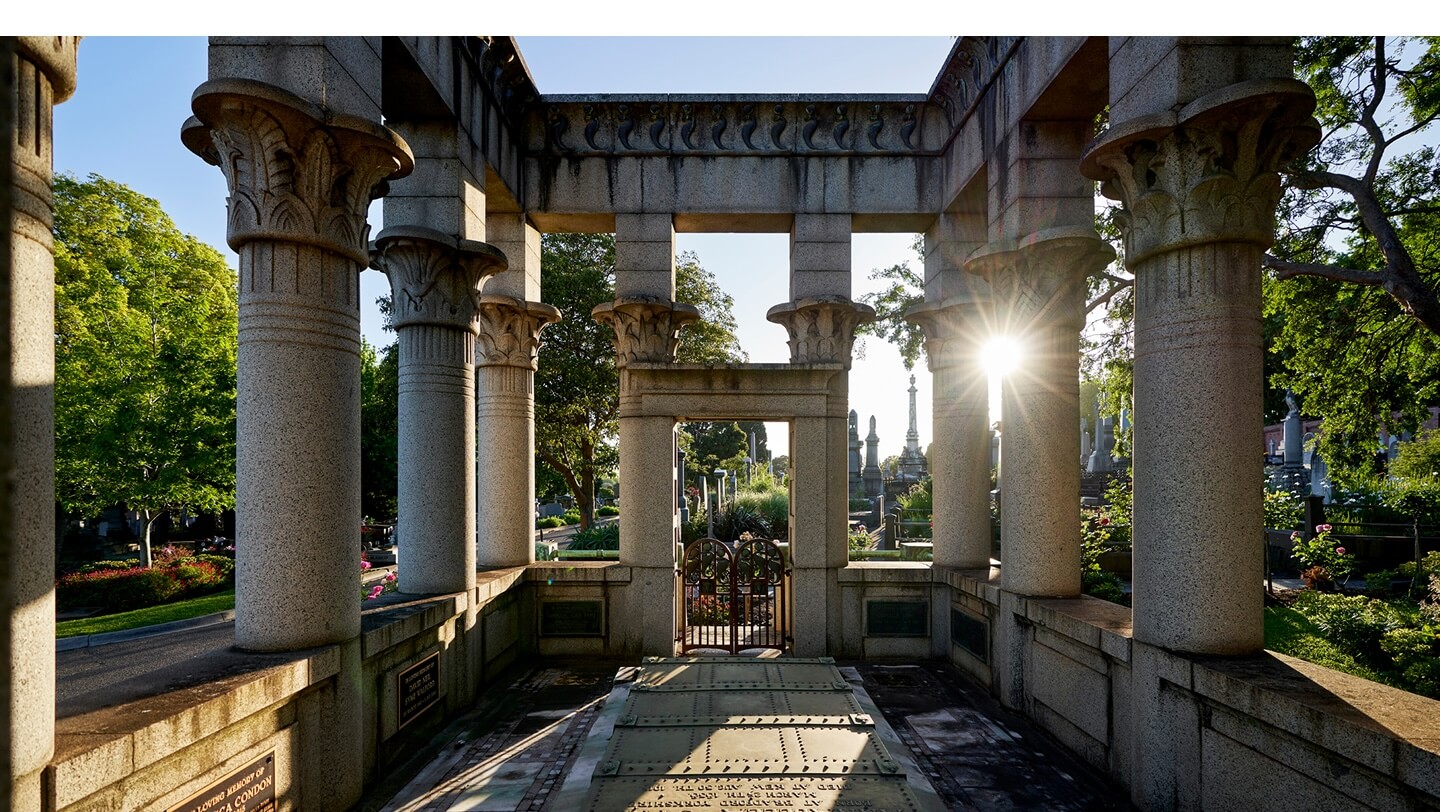
A resting place for history makers
Boroondara Cemetery is the resting place of over 80,000 people, each contributing in their own way to the story of Victoria. Among them are writers, business leaders, community figures, and families whose lives reflect the social, cultural and historical development of Melbourne.
These memorials are more than markers — they are connections to the past, preserving stories that continue to inspire and inform today.
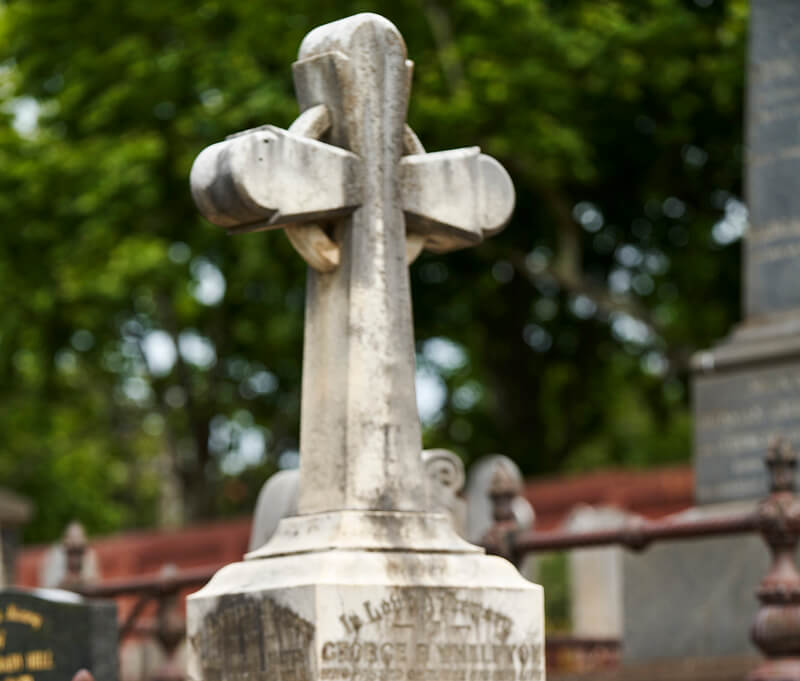
Stories that shaped our community
Ellen Quick (?—1859)
The first person buried at the cemetery, Ellen was from an early pioneering family in Kew who at one time owned the entire triangle of land bounded by Cotham Road and High Street from the Kew post office almost to Ridgeway Avenue.
Louis Buvelot (1814–1888)
A leading landscape painter of the Heidelberg School, whose work captured the unique light and character of the Australian bush.
Annie Springthorpe (1867–1897)
A young mother whose grieving husband, Dr. John Springthorpe, built the spectacular Springthorpe Memorial in her memory. The memorial was designed by architect Harold Desbrowe Annear, with sculptures by Bertram Mackennal and landscape design by William Guilfoyle of the Melbourne Botanic Gardens.
David Syme (1827–1908)
Joint proprietor of The Age newspaper, who lived and died in Kew. The Syme memorial, one of the most prominent in the cemetery, was modeled on Trajan’s Kiosk, adjacent to the Temple of Isis at Philae in Egypt.
Albert Purchas (1822–1909)
Architect-surveyor for the village of Hawthorn, who made an immense contribution to the design and layout of the Kew cemetery itself.
Alice Anderson (1897–1926)
Founder of the first all-women garage workshop in Australia. She was posthumously inducted into the Victorian Honour Roll of Women on International Women’s Day, March 8, 2020.
Henry Colden Antill Harrison (1836–1929)
Widely recognized as the "Father" of Australian Rules Football, Harrison was instrumental in codifying the sport in its earliest years.
Sir Owen Dixon (1886–1972)
A diplomat and judge of the Australian High Court, Dixon is widely regarded as Australia’s greatest ever jurist.
Search our records
Use our digital database to locate the memorials of notable figures and research their history.

